
Latest Products



Contact Us
- No.173 Xingqiao North Road, Yuhang District, Hangzhou, Zhejiang 31100, China
- jeson@gordon-elec.com
- +86-0571-8853 8375

300 mm Cable Tie
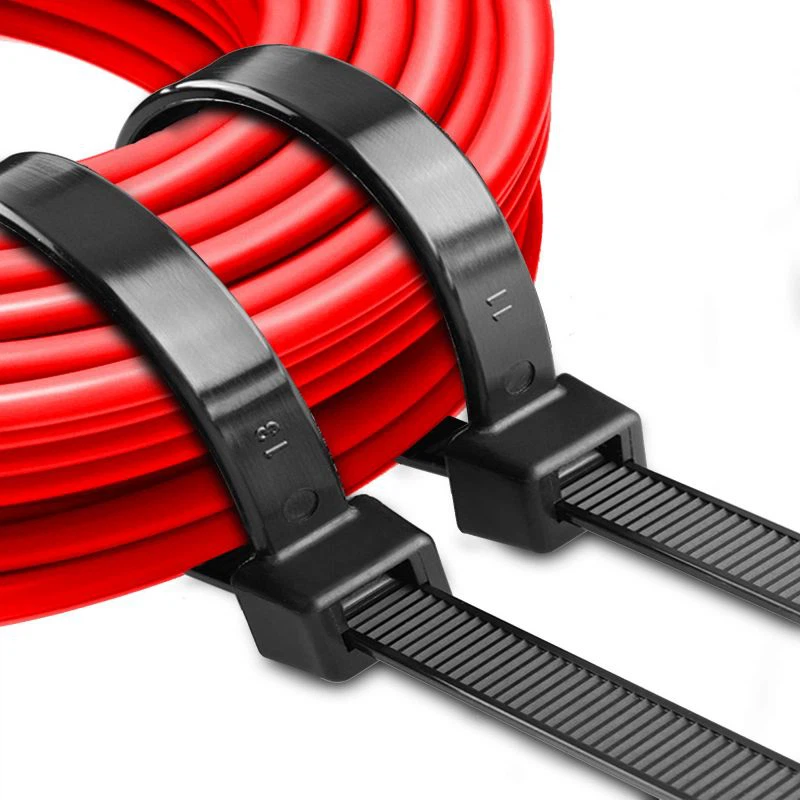
300mm cable ties are versatile fastening solutions, ideal for bundling and securing cables, wires, or other items. With a length of 300mm, they provide ample coverage for larger applications, offering durability and reliability. Suitable for various industries and uses, these cable ties ensure efficient organization and management.
When choosing the appropriate cable tie length, you need to consider the following factors:
Diameter of the cable bundle: The diameter of the cable bundle determines the minimum length of the cable tie. Generally speaking, the length of the cable tie should be greater than twice the diameter of the cable bundle in order to fully pass the free end through the locking mechanism and tighten it.
Shape of Cable Bundle: The shape of the cable bundle affects the maximum length of the cable tie. Generally speaking, the length of the cable tie should be less than half the circumference of the cable bundle to avoid excessive slack or slippage.
The position of the cable bundle: The position of the cable bundle determines how the cable tie is installed. Generally speaking, the cable tie can be directly wrapped around the cable bundle, or it can be fixed through a holder or other accessories, which will affect the cable tie. actual length.
Purpose of cable harness: The purpose of cable harness determines the functional requirements of cable ties. Generally speaking, cable ties can be used for fixation, management, identification, decoration, etc., which will affect the color, material, and structure of cable ties. Wait for selection.
The Product Can Withstand Tensile Force
| Tensile Strength:120lbs(55kgs) | ||||
| Model | L | W | E | |
| ITEM NO. | INCH | MM | MM | BUNDLE DIAMETER MM |
| GD-7.2X150 | 6.0" | 150 | 7.2 | 3-35 |
| GD-7.2X200 | 8.0" | 200 | 3-50 | |
| GD-7.2X250 | 10" | 250 | 4-65 | |
| GD-7.2X280 | 11" | 280 | 4-78 | |
| GD-7.2X300 | 12" | 300 | 4-80 | |
| GD-7.2X350 | 14" | 350 | 4-90 | |
| GD-7.2X370 | 14.6" | 370 | 4-98 | |
| GD-7.2X380 | 15" | 380 | 4-100 | |
| GD-7.2X400 | 16" | 400 | 4-105 | |
| GD-7.2X450 | 18" | 450 | 4-110 | |
| GD-7.2X500 | 20" | 500 | 4-150 | |
| GD-7.2X530 | 20.9" | 530 | 4-160 | |
| GD-7.2X550 | 21.6" | 550 | 4-165 | |
Related Products
Our nylon zip tie products offer a versatile range with various options for customization. Available in a multitude of colors, lengths, and packaging configurations, our zip ties cater to diverse needs. Whether for cable management, event organizing, or construction sites, our products are designed to meet your specific requirements. We prioritize customization, allowing you to choose colors, lengths, and packaging options tailored to your preferences. Crafted from high-quality nylon, our zip ties ensure durability and reliability across a wide range of applications.


Product raw materials and certifications
We are delighted to share the news that our cable tie products have achieved UL certification, obtaining file number E534653. UL certification, granted by the renowned safety science company, signifies that our products adhere to the most rigorous quality and safety standards globally. This certification underscores the exceptional performance and reliability of our cable tie products, assuring our customers of their top-notch quality and safety compliance.

Products raw material suppliers

High Quality Raw Material Supply
Our nylon cable ties are crafted with raw materials sourced from INVISTA, a global leader in chemical intermediates, specializing in the production of nylon and polypropylene. Boasting over 80 years of expertise in nylon manufacturing, INVISTA supplies top-notch nylon polymers and fibers. These materials find application in diverse industries, including automotive, electronics, medical, packaging, and apparel, reflecting our commitment to utilizing premium components from a trusted and experienced supplier.
How To Use Cable Ties Correctly?
Choose the right cable tie: Choose the right cable tie length, width, material and color based on the cable bundle's diameter, shape, location and purpose. Different cable harnesses have different characteristics and functions, such as heat resistance, cold resistance, weather resistance, chemical resistance, flame retardant, elasticity, releasability, etc., which should be selected according to the actual application environment and needs.
Tie the cable bundle: Pass the free end of the cable tie through the locking mechanism, wrap it around the cable bundle, and pull the free end back into the locking mechanism to lock it securely. The tightness of the cable tie should be moderate and should not be too tight or too loose to avoid damaging the cable or affecting its performance. The spacing between cable ties should be even, generally 3 to 4 times the diameter of the cable bundle.
Cut off the excess: After the cable tie is tied, the excess free ends should be cut smoothly and neatly. Do not leave sharp thorns at the joints to avoid scratching your fingers or cables.

What Types Of Cable Ties Are There?
Nylon tie: It is the most common type of cable tie, made of nylon 66 or other nylon materials. It has the characteristics of fire protection, acid resistance, corrosion resistance, good insulation, and not easy to age. It is suitable for various electronic and electrical industries.
Stainless steel tie: It is a cable tie made of stainless steel material. It has the characteristics of high temperature resistance, low temperature resistance, UV resistance, chemical resistance, and high tensile strength. It is suitable for special environments such as outdoor, solar energy, aviation, and ships.
Sprayed stainless steel cable tie: It is a cable tie with a layer of plastic sprayed on the surface of the stainless steel cable tie. It has the advantages of stainless steel cable ties while increasing insulation and aesthetics. It is suitable for the food and pharmaceutical industries.
Signage tie: It is a cable tie with a sign attached to the cable tie. It can be used to identify or manage cables. It is suitable for occasions where cable information needs to be distinguished or recorded.
Fixed lock tie: It is a cable tie with a fixed lock attached to the cable tie. It can be used to fix cables in sheet metal holes, bolts, steel plates, etc. It is suitable for situations where cables need to be prevented from vibrating and shifting. or interference.


Our Production Factory

Crafting Durable and Reliable Nylon Cable Ties
Distinguished by stringent quality control measures, our nylon cable tie manufacturing facility prioritizes excellence. Equipped with state-of-the-art facilities and a skilled workforce, we uphold rigorous standards at every stage of production. From meticulous raw material sourcing to thorough quality assessments, our unwavering commitment guarantees that each product surpasses the most stringent quality benchmarks. This dedication assures our customers of nylon cable ties renowned for their durability and reliability.
active members
years experience
events & challenges
expert instructors


FAQ:
1.What materials are commonly used in manufacturing Nylon ties, and what industries benefit from their characteristics?
Nylon 66 or other nylon materials are used. Their fire protection, acid resistance, and insulation make them suitable for electronic and electrical industries.
2.In what environments are Stainless Steel ties particularly effective, considering their unique characteristics?
Stainless Steel ties, with high temperature resistance, low temperature resistance, and chemical resistance, are ideal for outdoor, solar energy, aviation, and marine environments.
3.What advantages does a Sprayed Stainless Steel Cable Tie offer over a regular Stainless Steel tie, and where is it commonly applied?
Sprayed Stainless Steel Cable Ties combine the benefits of stainless steel with increased insulation and aesthetics. They are often used in the food and pharmaceutical industries.
4.How does a Signage Tie aid in cable management, and where is it typically used?
A Signage Tie, with an attached sign, is used to identify or manage cables. It finds application in scenarios where cable information needs to be distinguished or recorded.
5.What role does a Fixed Lock Tie play in preventing cable interference, and in what types of installations is it frequently employed?
Fixed Lock Ties, with a fixed lock, are used to secure cables in sheet metal holes, bolts, and steel plates. They are suitable for preventing vibrations, shifting, or interference in various installations.
6.Are there specific safety standards or certifications associated with Nylon ties used in electronic and electrical industries?
Nylon ties in electronic and electrical industries may adhere to specific safety standards or certifications to ensure their suitability and reliability.
7.Can Stainless Steel ties endure exposure to harsh weather conditions, such as sunlight and saltwater?
Yes, the high temperature resistance and corrosion resistance of Stainless Steel ties make them suitable for outdoor applications with exposure to sunlight and saltwater.
8.What types of plastic are commonly sprayed onto the surface of a Sprayed Stainless Steel Cable Tie, and how does it enhance their performance?
Various plastics can be sprayed onto the surface, enhancing insulation and aesthetics while maintaining the strength of the stainless steel cable tie.
9.How is the sign on a Signage Tie typically attached, and does it allow for customization?
The sign on a Signage Tie is usually attached securely, and some products may offer customization options for the signs.
10.Can Fixed Lock Ties be easily removed and reused, or are they designed for one-time use?
Fixed Lock Ties are typically designed for one-time use, providing a secure and permanent solution for cable fixation.
11.Are there specific regulations regarding the use of Stainless Steel ties in aviation and ship applications?
Stainless Steel ties in aviation and ship applications may need to comply with specific regulations to ensure safety and performance.
12.How do Sprayed Stainless Steel Cable Ties contribute to maintaining cleanliness in the food and pharmaceutical industries?
The sprayed layer on these cable ties enhances cleanliness and aesthetics, making them suitable for the stringent requirements of the food and pharmaceutical industries.
13.Can Signage Ties accommodate multiple signs for more detailed cable information, or are they typically designed for singular identification?
Signage Ties can vary, and some may accommodate multiple signs for detailed cable information, depending on the product design.
14.In what scenarios is the high tensile strength of Stainless Steel ties particularly advantageous?
The high tensile strength of Stainless Steel ties is advantageous in scenarios where cables need to withstand substantial forces or tension.
15.What precautions should be taken when using Fixed Lock Ties in environments with potential vibrations or shifting?
Fixed Lock Ties are suitable for preventing vibrations or shifting, but proper installation and secure fastening are crucial for optimal performance.
16.Can Sprayed Stainless Steel Cable Ties withstand frequent cleaning or exposure to cleaning agents in the food industry?
Yes, the sprayed layer provides additional resistance, allowing Sprayed Stainless Steel Cable Ties to withstand frequent cleaning and exposure to cleaning agents in the food industry.
17.How do Nylon ties perform in terms of flexibility, and are they suitable for applications requiring frequent adjustments?
Nylon ties are generally flexible, but they are typically designed for one-time use, making them less suitable for applications requiring frequent adjustments.
18.Are there color options available for Signage Ties, and can they be matched to specific cable identification needs?
Some Signage Ties may come in various colors, allowing users to match them to specific cable identification needs or color-coding systems.
19.Can Stainless Steel ties resist chemical exposure, and in what industries might this be a critical feature?
Stainless Steel ties are known for their chemical resistance, making them crucial in industries where exposure to corrosive substances is common.
20.How are Fixed Lock Ties installed in sheet metal holes or bolts, and what tools are typically required for their application?
Fixed Lock Ties are usually threaded through holes or around bolts and secured using manual or automatic tensioning tools, ensuring a firm and stable installation.
Hot Tags: 300 mm cable tie, China, suppliers, manufacturers, factory, custom, wholesale, twist lock cable ties, self locking cable tie, Liquidtight Flexible Metal Conduit, metal gland, nylon cable zip ties, Steel Flexible Conduit
You Might Also Like


