Latest Products



Contact Us
- No.173 Xingqiao North Road, Yuhang District, Hangzhou, Zhejiang 31100, China
- jeson@gordon-elec.com
- +86-0571-8853 8375

Black Nylon Cable Ties
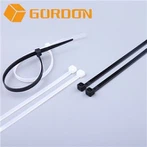
Black nylon cable ties are versatile fastening tools commonly used in various industries for bundling and organizing cables, wires, and other objects. They are made of durable nylon material, providing strength and flexibility. The black color helps to blend with dark-colored cables and offers UV resistance for outdoor use. These cable ties feature a serrated design for secure locking and are available in various lengths and tensile strengths to accommodate different applications.
Hangzhou Gordon Electric Co., Ltd. is one of the most reliable manufacturers and suppliers of black nylon cable ties in China, also supports custom service. Please feel free to wholesale advanced black nylon cable ties made in China here from our factory.
Black nylon cable ties are fasteners that are used to bundle or secure wires, cables, hoses, or other objects. They are made of nylon, a synthetic polymer that is strong, flexible, and resistant to heat, abrasion, and chemicals. Black cable ties are often preferred for outdoor applications, as they are resistant to ultraviolet rays from the sun and can withstand a wide range of temperatures.
Some common features of nylon cable ties are:
Length: The length of the cable tie determines how large of a bundle it can wrap around. Cable ties can range from 4 inches to 22 inches in length, or even longer for special purposes.
Width: The width of the cable tie affects its tensile strength, or how much force it can withstand before breaking. Cable ties can vary from 2.5 mm to 13 mm in width, with higher widths corresponding to higher tensile strengths.
Locking mechanism: The locking mechanism is the part of the cable tie that secures the tail after it is inserted through the head. There are different types of locking mechanisms, such as ratchet, pawl, ball, or barb, that offer different levels of security and ease of use.
Material: The material of the cable tie affects its durability, flexibility, and resistance to various environmental factors. Nylon is the most common material for cable ties, as it offers a good balance of strength and flexibility. Nylon can also be modified with additives to enhance its properties, such as UV inhibitors, flame retardants, or color pigments.
| Material: | Made of high quality Nylon 66, UL Flammability 94V-2 |
| Structure: | The design of head guarantee a high tensile strength while allowing a low insertion and pull through force. Rounded safety edges eliminate insulation damage |
| Color: | Natural/Black, other color could customized |
| Working temperature: | Applied from -40℃ to 85℃ |
| Length: | All lengths are available |
| width: | 2.5mm/ 3.6mm/ 4.8mm/ 7.2mm/ 9.0mm/ 12.0mm |
| Feature: | Flame-retardant(94V-2), Heat-resistant, UV resistant are available. |
| Certificate: | RoHS, CE, Material UL Test, UV Resistance Test, Flame Retardant Test, High And Low Temperature Test. |
| Usage: | First, the cable is bundled in the nylon cable tie; Next,the tail of the nylon cable tie is clamped by the tool; Finally, tighten with tool |
| Delivery time: | 3-15 days (Depend on your order quantity) after confirm order. |
| Payment terms: | T/T,Western Union,L/C ,PayPal |
| Model: | 2.5x80mm ~ 12.0x1200mm |
| Packing: | Stander 100pieces/bags |
| G.W.: | About 19kgs |
| N.W.: | About 18kgs |
| Carton Means: | Stander 54*32*30(cm) |
The Product Can Withstand Tensile Force
| Tensile Strength:50lbs(22kgs) | ||||
| Model | L | W | E | |
| ITEM NO. | INCH | MM | MM | BUNDLE DIAMETER MM |
| GD-4.8X120 | 4.7" | 120 | 4.8 | 3-30 |
| GD-4.8X160 | 6.3" | 160 | 3-40 | |
| GD-4.8X180 | 7.1" | 180 | 3-42 | |
| GD-4.8X190 | 7.5" | 190 | 3-46 | |
| GD-4.8X200 | 8.0" | 200 | 3-50 | |
| GD-4.8X250 | 10" | 250 | 3-65 | |
| GD-4.8X280 | 11" | 280 | 3-70 | |
| GD-4.8X300 | 12" | 300 | 3-80 | |
| GD-4.8X350 | 14" | 350 | 3-90 | |
| GD-4.8X360 | 14.2" | 360 | 3-94 | |
| GD-4.8X370 | 14.6" | 370 | 3-98 | |
| GD-4.8X380 | 15" | 380 | 3-102 | |
| GD-4.8X400 | 16" | 400 | 3-105 | |
| GD-4.8X430 | 16.9" | 430 | 3-120 | |
| GD-4.8X450 | 17.7" | 450 | 3-130 | |
| GD-4.8X500 | 19.7" | 500 | 3-150 | |
Product raw materials and certifications
We are delighted to share the news that our cable tie products have achieved UL certification, obtaining file number E534653. UL certification, granted by the renowned safety science company, signifies that our products adhere to the most rigorous quality and safety standards globally. This certification underscores the exceptional performance and reliability of our cable tie products, assuring our customers of their top-notch quality and safety compliance.

Products raw material suppliers

High Quality Raw Material Supply
Our nylon cable ties are crafted with raw materials sourced from INVISTA, a global leader in chemical intermediates, specializing in the production of nylon and polypropylene. Boasting over 80 years of expertise in nylon manufacturing, INVISTA supplies top-notch nylon polymers and fibers. These materials find application in diverse industries, including automotive, electronics, medical, packaging, and apparel, reflecting our commitment to utilizing premium components from a trusted and experienced supplier.
cable tie Appilication
When using black nylon cable ties, there are a few things to note:
Choose the appropriate length, width and tensile strength. The length of a cable tie determines the maximum diameter it can be tied to, and its width affects its tensile strength, which is the maximum pulling force it can withstand. Select the appropriate cable tie specifications based on your application needs to ensure the firmness and safety of the bundle.
Choose an appropriate locking mechanism. The locking mechanism of the cable tie refers to the connection method between the head and tail of the cable tie. There are different types, such as ratchet, claw, ball or barb, which provide different security and ease. Usability. For example, a ratchet-type locking mechanism can prevent the cable tie from loosening but is difficult to undo; a claw-type locking mechanism can be reused but is not strong enough.

Choose the right material. The material of a cable tie affects its durability, flexibility, and ability to withstand a variety of environmental factors. Nylon is the most common material for cable ties because it provides a good balance of strength and flexibility. Nylon can also have additives to improve its properties, such as adding UV resistance, flame retardancy or coloring.
Comply with relevant safety standards and regulations. When using cable ties, you should pay attention to comply with relevant safety standards and specifications, such as American UL standards, European CE standards, Canadian CSA standards, etc., to ensure that the quality and performance of cable ties meet the requirements and avoid electric shock, fire or other dangers. Condition.


Our Production Factory

Crafting Durable and Reliable Nylon Cable Ties
Distinguished by stringent quality control measures, our nylon cable tie manufacturing facility prioritizes excellence. Equipped with state-of-the-art facilities and a skilled workforce, we uphold rigorous standards at every stage of production. From meticulous raw material sourcing to thorough quality assessments, our unwavering commitment guarantees that each product surpasses the most stringent quality benchmarks. This dedication assures our customers of nylon cable ties renowned for their durability and reliability.
active members
years experience
events & challenges
expert instructors


FAQ:
1. Are black zip ties better?
Black zip ties offer similar functionality and performance as other colored zip ties. However, the choice between black and other colors depends on the specific application and preferences. Black zip ties are often preferred for applications where aesthetics or blending with dark-colored cables is desired. Additionally, black zip ties may offer better UV resistance compared to lighter colors, making them suitable for outdoor use.
2. What are nylon cable ties used for?
Nylon cable ties, also known as zip ties or cable fasteners, are used for bundling and organizing cables, wires, hoses, and other items. They are commonly employed in various industries such as automotive, construction, electronics, and manufacturing for securing and tidying cables in place. Nylon cable ties are versatile, cost-effective, and easy to use, making them indispensable in cable management applications.
3. What is the difference between black and white cable ties?
The primary difference between black and white cable ties lies in their color. While both colors offer the same functionality and performance, they may be preferred for different applications. Black cable ties are often chosen for applications where blending with dark-colored cables is desired or where UV resistance is necessary for outdoor use. On the other hand, white cable ties may be preferred for applications where visibility or contrast against dark backgrounds is important.
4. What is the best material for cable ties?
Nylon is the most common and widely used material for cable ties due to its excellent balance of strength, flexibility, and affordability. Nylon cable ties are resistant to corrosion, moisture, and most chemicals, making them suitable for a wide range of indoor and outdoor applications. Additionally, nylon cable ties are available in various grades, offering different levels of tensile strength and temperature resistance to meet specific application requirements. Overall, nylon remains the preferred material for cable ties in many industries.
Hot Tags: black nylon cable ties, China, suppliers, manufacturers, factory, custom, wholesale, black nylon cable ties, cable tie 10 inch, multi color zip ties, push mount tie, plastic cable zip, heavy duty reusable zip ties
You Might Also Like