Latest Products



Contact Us
- No.173 Xingqiao North Road, Yuhang District, Hangzhou, Zhejiang 31100, China
- jeson@gordon-elec.com
- +86-0571-8853 8375

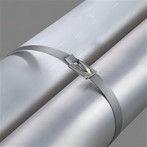
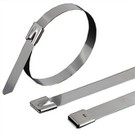
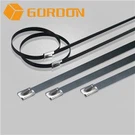
Steel Locking Tie
Steel Locking Tie's strong steel material and reliable self-locking structure enable it to withstand greater tension when tying objects, and is not easy to break or loosen, ensuring the safety of the tied objects. For example, in the installation of power lines, it can reliably fix cables to prevent cables from falling and causing safety accidents.
Stainless steel zip ties are robust fastening tools widely employed in numerous applications due to their durability and reliability. To effectively utilize them, follow these steps:
Firstly, identify the items requiring bundling or securing. Whether it's cables, wires, hoses, or other materials, stainless steel zip ties can accommodate a variety of objects thanks to their corrosion-resistant nature.
Next, choose the appropriate length of the stainless steel zip tie based on the diameter of the objects you're fastening. These ties come in various lengths, so select one that allows for a snug fit around the items you're securing.


Once you've determined the correct length, thread the narrow end of the zip tie through the head or loop end. Pull it tightly to form a loop around the bundled objects, ensuring it's secure enough to prevent any movement.
After threading the tie, insert the tail end through the locking mechanism or self-locking mechanism. Pull the tail end firmly to tighten the tie around the objects, ensuring it's securely fastened to prevent slippage.
Finally, trim off any excess tail end of the stainless steel zip tie using wire cutters or scissors for a neat finish. Exercise caution not to cut too close to the locking mechanism to maintain its integrity.
Product certification

FAQ
1.Will the strength and hardness of steel self-locking cable ties be affected by heat treatment?
1. Annealing
Process: Heat the steel locking tie to a specific temperature, hold it for a certain period, and then cool it slowly.
Impact on Strength and Hardness: This treatment can eliminate machining stresses and homogenize the internal crystal structure. After annealing, the hardness of the steel locking cable tie decreases, its toughness improves, and the strength also drops to some extent. As a result, it becomes more flexible and malleable, facilitating subsequent processing.
2. Normalizing
Process: Heat the tie above the critical temperature, hold it, and then cool it in the air. The cooling rate is faster than that of annealing.
Impact on Strength and Hardness: Normalizing refines the grains of the steel and makes the structure uniform. Compared with annealed products, the strength and hardness of the steel locking cable tie after normalizing increase, while the toughness remains basically unchanged. It can withstand greater tensile forces and is suitable for regular bundling scenarios with higher strength requirements.
3. Quenching
Process: Heat the tie above the critical temperature, hold it, and then rapidly cool it by immersing it in a quenching medium (such as water or oil).
Impact on Strength and Hardness: Quenching causes the steel to form a martensite structure, which significantly increases the strength and hardness. However, this treatment also significantly increases brittleness, making it prone to fracture under uneven stress or impact.
4. Tempering
Process: After quenching, heat the tie to a range below the critical temperature, hold it, and then cool it.
Impact on Strength and Hardness: Tempering can relieve the internal stress caused by quenching and reduce brittleness. Low - temperature tempering can retain high hardness and strength while reducing some brittleness. Medium - temperature tempering can achieve good elasticity and a certain degree of strength. High - temperature tempering can achieve a good balance between strength and toughness, meeting the requirements of most practical applications.
Hot Tags: steel locking tie, China, suppliers, manufacturers, factory, custom, wholesale, cable tie black, cable tie clips, porter cable tie downs, heavy duty plastic cable ties, Thread longer cable gland, ss pvc coated cable ties
| PART NO. | APPROX.LENGTH | APPROX.WIDTH | MAX.BUNDLE DIA. |
| MM(INCH) | MM(INCH) | MM(INCH) | |
| GDC-4.6x150 | 150(5.9) | 4.6(0.181) | 37(1.46) |
| GDC-4.6x200 | 200(7.87) | 50(1.97) | |
| GDC-4.6x250 | 250(9.84) | 63(2.48) | |
| GDC-4.6x300 | 300(11.8) | 76(2.99) | |
| GDC-4.6x350 | 350(13.78) | 89(3.50) | |
| GDC-4.6x400 | 400(15.75) | 102(4.02) | |
| GDC-4.6x450 | 450(17.72) | 115(4.53) | |
| GDC-4.6x500 | 500(19.69) | 128(5.04) | |
| GDC-4.6x550 | 550(21.65) | 141(5.55) | |
| GDC-4.6x600 | 600(23.62) | 154(6.06) | |
| GDC-7.9x150 | 150(5.9) | 7.9(0.311) | 37(1.46) |
| GDC-7.9x200 | 200(7.87) | 50(1.97) | |
| GDC-7.9x250 | 250(9.84) | 63(2.48) | |
| GDC-7.9x300 | 300(11.8) | 76(2.99) | |
| GDC-7.9x350 | 350(13.78) | 89(3.50) | |
| GDC-7.9x400 | 400(15.75) | 102(4.02) | |
| GDC-7.9x450 | 450(17.72) | 115(4.53) | |
| GDC-7.9x500 | 500(19.69) | 128(5.04) | |
| GDC-7.9x550 | 550(21.65) | 141(5.55) | |
| GDC-7.9x600 | 600(23.62) | 154(6.06) | |
| GDC-7.9x650 | 650(25.59) | 167(6.57) | |
| GDC-7.9x700 | 700(27.56) | 180(7.09) | |
| GDC-7.9x750 | 750(29.53) | 191(7.52) | |
| GDC-7.9x800 | 800(31.5) | 193(7.59) | |
| GDC-12x200 | 200(7.87) | 12(0.472) | 50(1.97) |
| GDC-12x250 | 250(9.84) | 63(2.48) | |
| GDC-12x300 | 300(11.8) | 76(2.99) | |
| GDC-12x350 | 350(13.78) | 89(3.50) | |
| GDC-12x400 | 400(15.75) | 102(4.02) | |
| GDC-12x450 | 450(17.72) | 115(4.53) | |
| GDC-12x500 | 500(19.69) | 128(5.04) | |
| GDC-12x550 | 550(21.65) | 141(5.55) | |
| GDC-12x600 | 600(23.62) | 154(6.06) | |
| GDC-12x650 | 650(25.59) | 167(6.57) | |
| GDC-12x700 | 700(27.56) |
You Might Also Like