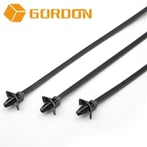
PA66 cable ties are widely regarded as the default fastening solution for demanding environments. However, not all PA66 cable ties are the same, and improper selection can negate the very advantages that make PA66 the industry standard.
Industrial and outdoor installations impose different stresses-mechanical load, temperature variation, UV exposure, chemical contact, vibration, and long service life expectations. Choosing the right PA66 cable tie requires a systematic evaluation of application conditions, performance requirements, and material formulation, rather than relying solely on tensile strength or size.
Why Selection Matters More Than Material Name
Specifying "PA66 cable ties" alone is insufficient for high-reliability applications. Performance depends on:
Resin grade and formulation
UV or heat stabilization
Flame-retardant additives
Dimensional design
Manufacturing quality
Two PA66 cable ties with the same width and length can perform very differently over time. Selection should therefore focus on functional requirements, not just material classification.
Defining the Application Environment
Before choosing a cable tie, the operating environment must be clearly defined. The following factors determine the correct PA66 specification.
Indoor vs Outdoor Exposure
Key questions:
Will the cable tie be exposed to direct sunlight?
Is long-term UV resistance required?
Will it experience rain, humidity, or temperature cycling?
Indoor industrial applications prioritize:
Load retention
Heat resistance
Flame performance
Outdoor applications require:
UV stabilization
Weather resistance
Aging stability
Temperature Range
Temperature affects tensile strength, creep resistance, and aging.
Typical PA66 operating characteristics:
Continuous temperature: –40°C to +85°C
Short-term exposure: up to +120°C (grade dependent)
Selection guidance:
Electrical cabinets → standard PA66
Engine compartments → heat-stabilized PA66
Cold environments → PA66 with controlled moisture conditioning
Avoid selecting ties based only on room-temperature tensile values.
Mechanical Load and Installation Orientation
Load is not just the weight of cables-it includes:
Static load
Dynamic vibration
Orientation (horizontal vs vertical)
Safety margin requirements
Vertical or suspended installations demand:
Low creep behavior
High long-term load retention
For these cases, wider PA66 ties with thicker straps provide better stress distribution, not just higher tensile ratings.


Selecting the Right PA66 for Industrial Applications
Electrical and Control Systems
Key requirements:
Flame retardancy
Stable tensile strength under heat
Dimensional consistency
Recommended features:
UL94 V-2 or V-0 rated PA66
Consistent locking head geometry
Smooth strap edges to protect insulation
Avoid low-grade PA66 with inconsistent molding tolerances, which can compromise locking reliability.
Industrial Machinery and Automation
Challenges include:
Continuous vibration
Heat from motors and drives
Oil and lubricant exposure
Selection priorities:
High fatigue resistance
Chemical-resistant PA66 formulation
Robust locking tooth design
In machinery environments, locking mechanism durability is often more critical than peak tensile strength.
Automotive and Transportation Systems
Automotive environments combine:
Elevated temperatures
Oils and fuels
Shock and vibration
Long service life expectations
Recommended characteristics:
Heat-stabilized PA66
High creep resistance
Proven aging performance
In these applications, PA66 outperforms PA6 and polypropylene due to superior thermal stability.
Selecting the Right PA66 for Outdoor Applications
UV Exposure Considerations
Unstabilized PA66 degrades under prolonged UV exposure.
For outdoor use, select:
UV-stabilized PA66
Carbon black-filled formulations
Ties rated for multi-year outdoor exposure
Typical applications:
Telecom infrastructure
Solar PV cable management
Outdoor lighting systems
UV stabilization directly impacts long-term tensile retention, not just appearance.
Weather and Environmental Stress
Outdoor cable ties face:
Rain and humidity
Temperature cycling
Pollution and airborne chemicals
PA66 performs well in these conditions when:
Properly stabilized
Manufactured with controlled moisture content
Avoid indoor-grade PA66 for outdoor installations, even if initial strength appears sufficient.
Wind Load and Movement
In outdoor cable runs, wind can introduce cyclic loading.
Selection tips:
Use wider PA66 ties for large bundles
Reduce spacing between ties
Choose designs with reinforced locking heads
This minimizes fatigue and long-term loosening.


When Is It Required?
Flame-retardant PA66 is not always mandatory, but it is essential in:
Electrical panels
Public buildings
Transportation systems
Data centers
Selection considerations:
UL94 rating required by local code
Mechanical performance retention after FR modification
High-quality flame-retardant PA66 maintains tensile strength, while low-grade formulations may become brittle.
Size, Width, and Geometry Selection
Width vs Tensile Strength
Wider ties distribute load more evenly and reduce:
Stress concentration
Creep rate
Cable jacket damage
Do not select ties solely based on published tensile strength-consider bundle diameter and load distribution.
Length and Bundle Diameter
Proper sizing ensures:
Full locking tooth engagement
Adequate tail length
Secure tightening without over-stress
Undersized ties increase failure risk even if material quality is high.
Locking Mechanism Quality
The locking head is often the weakest point in poor-quality cable ties.
High-quality PA66 ties feature:
Hard, wear-resistant teeth
Precise tooth pitch
Stable head geometry under load
For industrial and outdoor use, locking reliability is as important as strap strength.
Aging Performance and Service Life Expectations
Cable ties are typically expected to last as long as the system they support.
PA66 selection should consider:
Thermal aging resistance
UV aging behavior
Chemical exposure over time
Ask suppliers for:
Aging test data
UV exposure ratings
Long-term tensile retention figures
Short-term tensile tests alone are insufficient.
Compliance and Standards
Industrial and outdoor projects often require compliance with:
UL standards
IEC or ISO requirements
Automotive or telecom specifications
PA66 cable ties are widely accepted in global standards, but certification must match the specific application.
Common Selection Mistakes to Avoid
Choosing indoor PA66 for outdoor use
Relying only on initial tensile strength
Ignoring creep and aging behavior
Overlooking locking head quality
Using undersized ties to save cost
These mistakes often lead to premature failure and higher lifecycle costs.
Choosing the right PA66 cable tie for industrial and outdoor applications requires more than selecting a material name or tensile rating. It requires a clear understanding of environmental exposure, mechanical load, aging expectations, and compliance requirements.
When properly specified, PA66 cable ties deliver:
Reliable load retention
Thermal and environmental stability
Long service life with minimal maintenance
For engineers and procurement professionals, a disciplined selection approach ensures that PA66's inherent advantages translate into real-world reliability and reduced operational risk.