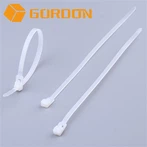
Heat-resistant nylon cable ties-commonly known as high-temperature ties, heat-resistant binding ties, heat-stabilized nylon fasteners, high-temperature cable ties, or high-temperature wire ties-are essential components in modern industry, enabling the secure binding of cables under extreme temperature conditions. While ordinary nylon cable ties are suitable for everyday electrical and industrial applications, they often lose mechanical strength when exposed to high temperatures for extended periods. Heat-resistant cable ties overcome this deficiency.

1. What Are Heat-Resistant Nylon Cable Ties?
Heat-resistant nylon cable ties are a special variant of traditional cable fastening straps made from heat-stabilized polyamide resin, primarily PA66 or PA46. They are designed to withstand elevated temperatures for long periods without losing tensile strength, flexibility, or locking integrity.
Compared to standard nylon zip ties-which typically operate within –40°C to +85°C-high-temperature nylon ties can perform reliably in environments reaching 110°C, 125°C, 150°C, and even up to 180°C depending on the grade.
These advanced thermal properties allow heat-resistant cable straps to be used in:
- Automotive engine bays
- Industrial heating zones
- Electrical cabinets with high heat loads
- Boilers and furnaces
- Manufacturing plants
- Solar installations
- Power generators
- In industries where heat exposure is unavoidable, regular nylon ties will become brittle or deform, while heat-resistant nylon tie wraps maintain long-term performance and safety.
2. Material Science Behind Heat-Resistant Cable Ties
To understand how these high-temperature wire ties work, it's important to examine the materials and chemical structure that enable their thermal stability.
Heat-resistant cable ties rely on carefully engineered material science to achieve the thermal stability required for demanding applications. The base material is typically PA66 polyamide, chosen for its mechanical strength, flexibility, high melting point around 250 °C, chemical resistance, and electrical insulation properties. Although PA66 has excellent inherent thermal characteristics, standard nylon still begins to soften and lose tensile strength at approximately 90–100 °C. To elevate its performance, manufacturers incorporate various material enhancements and structural optimizations that prevent degradation under prolonged heat exposure.
A key improvement comes from the use of heat stabilizers and functional additives, which modify the polymer structure to resist thermal oxidation. These include copper-based stabilizers, organic heat-resistant compounds, antioxidants, UV inhibitors, and reinforcing fillers. By protecting the nylon's molecular chains, these additives allow heat-stabilized cable ties to maintain strength in environments such as engine compartments, densely wired electrical cabinets, industrial heating zones, and solar installations exposed to both sunlight and elevated temperatures. As a result, these enhanced cable fasteners retain mechanical integrity far beyond the capabilities of standard nylon ties.
For even more extreme thermal conditions, certain high-performance cable ties are manufactured using PA46, a premium polyamide offering higher crystallinity, better heat-deflection temperature, and superior fatigue resistance, enabling long-term operation at 150–170 °C. In specialized industries-such as food processing, pharmaceuticals, and medical manufacturing-heat resistance is sometimes combined with metal-detectable properties. These cable ties, made from PA66 blended with iron pigments and detection additives, not only withstand high heat but also ensure traceability if fragments break off, supporting strict HACCP and contamination-control requirements.
3. How Heat-Resistant Nylon Cable Ties Work
3.1 Thermal-Stabilized Nylon Materials and Additive Technology
Heat-resistant nylon cable ties operate primarily through the enhanced performance of thermal-stabilized nylon polymers. Unlike standard harness ties made from conventional nylon 66, these high-temperature cable ties are manufactured using modified nylon resins blended with heat-stabilizing additives, such as copper-based stabilizers or UV-resistant compounds. These additives improve polymer chain stability when exposed to elevated temperatures, preventing premature degradation, brittleness, or loss of mechanical strength. As a result, heat-resistant wire ties can retain tensile strength even in environments reaching 120°C to 150°C, and specialized grades can withstand up to 260°C for short-term exposure. The improved molecular stability is the fundamental reason these ties perform reliably under extreme thermal stress.
3.2 Structural Integrity and Tensile Strength Retention Under Heat
Another essential principle behind heat-resistant nylon cable ties is their ability to maintain structural integrity under continuous thermal load. High-temperature cable fasteners feature a design where the locking head, pawl, and strap interact seamlessly even when thermal expansion occurs. The specially engineered nylon maintains rigidity without warping, softening, or melting under high heat, ensuring the locking mechanism does not slip. In industrial environments-such as automotive engine bays, power plants, or metal processing lines-thermal cycling frequently causes materials to expand and contract. Heat-resistant wire ties compensate for this by providing consistent tensile strength, preventing loosening of cables or hoses. The result is a secure, long-lasting bundle that stays tight even after thousands of
temperature cycles.
3.3 Moisture Control, Oxidation Resistance, and Long-Term Durability
Heat-resistant nylon ties also work by resisting environmental factors that typically accelerate polymer degradation. High-temperature cable ties are engineered to minimize moisture absorption, which is critical because conventional nylon becomes weak when saturated with water and exposed to heat simultaneously. Reduced moisture uptake ensures consistent load-bearing capacity in humid or outdoor settings. Additionally, thermal-stable cable ties often incorporate oxidation-resistant stabilizers, preventing the nylon from breaking down due to oxygen exposure at high temperatures. This combination of heat stability, oxidation resistance, and low moisture sensitivity leads to excellent long-term durability, making these ties suitable for electrical cabinets, solar installations, aerospace equipment, and heavy-duty industrial machinery where prolonged heat exposure is unavoidable.
4. Types of Heat-Resistant Nylon Cable Ties
High-temperature cable fasteners come in several variations based on design, materials, and performance.
4.1 Standard Heat-Resistant Cable Ties
Typically rated for 110–125°C
Used in automotive, electrical installations, HVAC systems
4.2 Extra High-Temperature Cable Ties (PA46 or Heat-Stabilized PA66)
Rated for 150–180°C
Used near engines, furnaces, industrial heating zones
4.3 Flame-Retardant High-Temperature Ties
These combine heat resistance and fire resistance (UL94V-0 grade). They are used in:
Power stations
Public transportation
Rail systems
High-risk electrical environments
4.4 UV + Heat Dual-Resistant Ties
Designed for outdoor high-heat applications such as:
Solar power installations
Outdoor telecom base stations
Rooftop lightning protection systems
4.5 Releasable Heat-Resistant Cable Ties
Used where cables require periodic maintenance under high heat, including:
Industrial machinery
Production line wiring
Automotive service
5. Key Performance Characteristics
5.1 Superior Temperature Endurance and Thermal Stability
Heat-resistant cable straps are engineered to function reliably in environments where standard nylon ties would soften, deform, or lose tensile strength. Thanks to enhanced nylon formulations and heat-stabilizing additives, these high-temperature cable ties can operate continuously in temperature ranges between -40°C and 150°C, and certain specialty grades can endure peaks up to 260°C. This elevated thermal stability makes them ideal for cable bundling near engines, furnaces, industrial heaters, and environments subject to long-term radiant heat. Their consistent performance under extreme temperatures is one of the primary reasons they are preferred for demanding industrial applications.
5.2 Increased Mechanical Strength and Structural Integrity
Another key performance advantage is the high tensile strength retained under elevated temperatures. Conventional nylon fasteners often lose rigidity when exposed to prolonged heat, causing their locking mechanism to slip. In contrast, heat-resistant cable straps maintain structural integrity, ensuring that the pawl, locking head, and serrated body work together securely. This prevents loosening in high-vibration areas such as automotive engine bays, wind turbines, or industrial machinery. Even after repeated thermal expansion and contraction cycles, thermal-stable wire fasteners remain tight and resistant to breakage.
5.3 Enhanced Resistance to Environmental Degradation
High-temperature cable straps also exhibit strong resistance to humidity, oxidation, chemicals, and UV radiation, all of which can accelerate material degradation. Moisture absorption, a weakness of traditional nylon, is significantly reduced through modified resin formulations, ensuring the straps retain reliable strength even when exposed to steam, outdoor weather, or high-humidity environments. Additionally, anti-oxidation compounds slow down polymer breakdown caused by high-temperature oxygen exposure. This capability makes heat-resistant wire ties suitable for electrical systems, rooftop solar installations, and marine applications where environmental durability is critical.
5.4 Long Service Life and Industrial-Grade Reliability
The combination of heat stability, mechanical strength, and environmental resistance gives heat-resistant cable straps a substantially longer lifespan compared to standard cable ties. They maintain flexibility without turning brittle and preserve clamping force under continuous stress, making them a reliable solution for long-term installations. Industrial users in sectors such as aerospace, automotive manufacturing, and power generation rely on these high-temperature cable fasteners because they reduce maintenance intervals and ensure consistent performance in harsh operating environments. This extended lifespan provides significant value for large-scale projects where cable failures can lead to expensive downtime.