


When standard nylon cable ties age under UV radiation or high temperatures, stainless steel cable ties become the recognized standard for permanent, heavy-duty, and highly durable applications. Should you choose 304 or 316 stainless steel?
The Metallurgical Foundation
Introduction to Stainless Steel Grades
To make an informed decision between 304 stainless steel cable ties and 316 stainless steel cable ties, it is essential to first understand the metallurgy behind these materials. Both grades belong to the austenitic family of stainless steels, which is widely recognized for its excellent formability, durability, and resistance to oxidation. These properties make them highly suitable for demanding industrial and commercial applications.
Base Composition and Corrosion Mechanism
The fundamental composition of both 304 and 316 stainless steel includes iron, chromium (typically around 16–18%), and nickel (approximately 8–10%). This combination enables the formation of a passive chromium oxide layer on the surface of the material. This protective layer is the key mechanism that prevents rust and corrosion in normal atmospheric conditions, ensuring long-term performance and reliability.
Key Metallurgical Difference: Molybdenum Addition
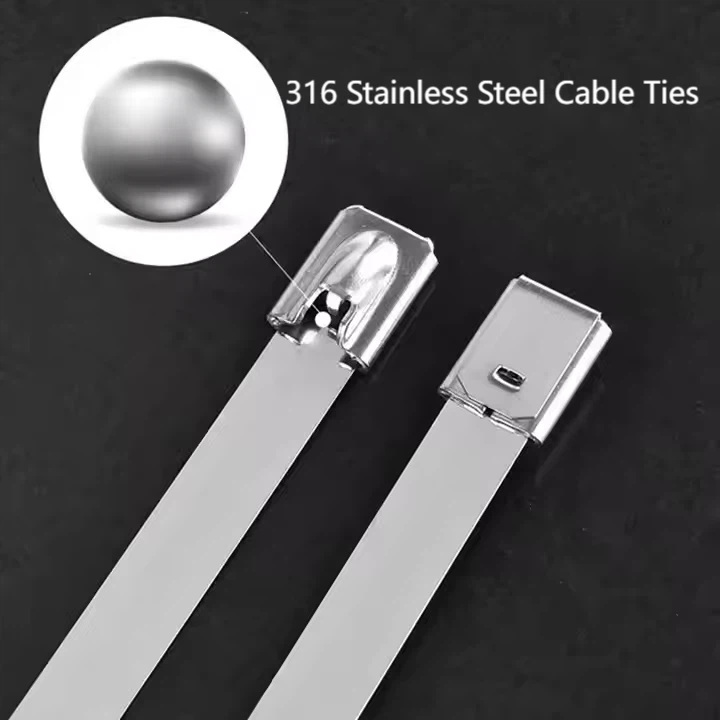
The primary distinction between the two grades lies in the presence of molybdenum. 304 stainless steel, also known as A2 stainless in certain industrial contexts, does not contain molybdenum and relies on chromium and nickel alone for corrosion resistance. In contrast, 316 stainless steel-often referred to as A4 or marine-grade stainless-contains approximately 2% to 3% molybdenum. This addition significantly enhances its resistance to chlorides, acids, and other aggressive chemical environments.
Application Implications and Selection Guidance
From a practical standpoint, this compositional difference directly impacts performance in various environments. 304 stainless steel cable ties are ideal for dry, indoor, or mildly humid conditions, where corrosion risks are relatively low. On the other hand, 316 stainless steel cable ties are specifically engineered for harsh environments, such as marine, chemical processing, or coastal applications, where exposure to saltwater and corrosive agents is common. Understanding these differences helps ensure the selected material will resist pitting, stress corrosion cracking, and long-term degradation.
Corrosion Resistance: Evaluating Atmospheric and Chemical Exposure
The primary differentiator when choosing between these two grades is the specific nature of the environmental exposure. Corrosion resistance is not a binary state where a material either rusts or does not; rather, it is a spectrum of endurance against specific corrosive agents. 304 stainless steel cable ties offer robust resistance against atmospheric oxidation, fresh water, and most organic chemicals. They perform exceptionally well in indoor manufacturing facilities, data centers, and general construction environments where exposure to pollutants is minimal. However, 304 steel is vulnerable to pitting corrosion in environments rich in chlorides. This includes coastal regions where salt spray is present, de-icing salts used on roadways and bridges, and industrial zones where chemical runoff occurs.
316 stainless steel cable ties, with their molybdenum-enriched matrix, are specifically formulated to combat these chloride attacks. If your application involves direct contact with saltwater, such as in offshore oil rigs, shipbuilding, dockside infrastructure, or marine aquaculture, 316 is the minimum acceptable standard. Furthermore, environments that involve exposure to sulfuric acids, chlorinated cleaning agents, or high-humidity industrial processes-such as wastewater treatment plants or chemical processing facilities-demand the enhanced barrier that 316 provides. In these settings, opting for 304 ties can lead to rapid degradation, where microscopic pits form on the surface, eventually leading to stress corrosion cracking (SCC) that causes catastrophic failure under tension. Therefore, evaluating the presence of chlorides and the frequency of chemical exposure is essential to determine whether standard 304 stainless steel cable ties will suffice or if the added investment in 316 is justified.
Mechanical Strength and Temperature Tolerance in Demanding Applications
Beyond corrosion, the physical demands of the application-specifically tensile strength and thermal stability-play a crucial role in selecting the right stainless steel cable tie. Both 304 and 316 alloys offer superior tensile strength compared to nylon or polyester alternatives, typically ranging from 200 to over 800 pounds of loop tensile strength depending on the width and thickness of the tie. However, the mechanical performance across temperature extremes is where metal ties outshine polymer products. Both 304 and 316 stainless steel cable ties maintain their structural integrity across a broad temperature spectrum, generally functioning continuously in temperatures ranging from -80°C to 150°C.
Despite their similar thermal profiles, there are subtle mechanical differences worth noting. 304 stainless steel generally exhibits slightly higher work-hardening rates during the bending and locking process. This means that when you cinch a 304 stainless steel cable tie, it may feel stiffer and achieve a very rigid grip quickly. This is advantageous for applications requiring high immediate clamp force on rigid bundles. Conversely, 316 stainless steel tends to maintain a slightly higher level of ductility. In applications subject to vibration, thermal expansion, or dynamic loads-such as on heavy machinery, engines, or outdoor transmission lines-the ductility of 316 allows the tie to absorb movement without fracturing. Additionally, for applications requiring high-temperature strength where creep resistance is paramount, both grades perform admirably, but 316 is often preferred in cyclic temperature environments where the material expands and contracts frequently, as its resistance to intergranular corrosion remains superior after prolonged heating.
The Critical Factor of Installation and Tooling Compatibility
The selection of the grade also influences the installation process. Stainless steel cable ties are not installed with the same manual tensioning tools used for nylon; they require specialized tensioning and cutting tools designed to handle the hardness of metal. When comparing 304 vs. 316 stainless steel cable ties, installers often report that 304 is marginally harder and more resistant to bending during the installation process. While both grades require high-quality tensioning tools to achieve the manufacturer's rated tensile strength, 304's increased hardness can sometimes lead to sharper edges if not cut and folded correctly, posing a risk to personnel or adjacent cabling if sharp edges are left exposed.
316 stainless steel cable ties, while incredibly strong, are often perceived as slightly more "forgiving" during the bending and locking phase.
This characteristic can reduce installation time and minimize waste due to accidental breakage or misalignment during the cinching process.
Moreover, for applications requiring the bundling of sensitive fiber optic cables or insulated wiring, the smoother deformation characteristics of 316 can be beneficial. However, from a tooling perspective, it is critical to ensure that the installation tools are rated for the specific grade and width of the tie being used. Regardless of whether you choose 304 or 316, using a proper tensioning tool that automatically cuts and locks the tie ensures a flush, safe termination. Failure to use the correct tooling often results in under-tensioned bundles that slip or over-tensioned ties that compromise the structural integrity of the cable tie itself.
Lifecycle Cost Analysis: Initial Investment Versus Long-Term Durability
For procurement managers and engineers, the decision often comes down to cost versus lifecycle value. There is a tangible price difference between 304 stainless steel cable ties and 316 stainless steel cable ties. Due to the higher nickel content and the addition of molybdenum-both of which are volatile commodities on the global market-316 stainless steel typically commands a premium of 20% to 40% over 304. In large-scale projects requiring thousands of ties, this initial cost difference can be substantial. However, focusing solely on the upfront cost is a common pitfall that leads to significantly higher expenses in maintenance, replacement, and downtime later.
A lifecycle cost analysis requires evaluating the cost of failure. In a controlled indoor environment with stable temperatures and no chemical exposure, 304 stainless steel cable ties offer an excellent return on investment, providing decades of service without degradation. Conversely, in a coastal chemical plant where 304 ties might begin to show pitting corrosion within months or a year, the cost of a plant shutdown to replace failed bundling-potentially endangering critical conduit systems or safety cabling-far exceeds the initial material savings. For environments classified as high-risk for corrosion (C5-M marine environments or high-humidity industrial zones), the premium paid for 316 stainless steel cable ties is effectively an insurance policy. It guarantees that the fastening system will match or exceed the lifespan of the equipment it secures, eliminating the need for costly rework and ensuring compliance with stringent industry safety regulations.
Long-Term Durability
For procurement managers and engineers, the decision often comes down to cost versus lifecycle value. There is a tangible price difference between 304 stainless steel cable ties and 316 stainless steel cable ties. Due to the higher nickel content and the addition of molybdenum-both of which are volatile commodities on the global market-316 stainless steel typically commands a premium of 20% to 40% over 304. In large-scale projects requiring thousands of ties, this initial cost difference can be substantial. However, focusing solely on the upfront cost is a common pitfall that leads to significantly higher expenses in maintenance, replacement, and downtime later.
A lifecycle cost analysis requires evaluating the cost of failure. In a controlled indoor environment with stable temperatures and no chemical exposure, 304 stainless steel cable ties offer an excellent return on investment, providing decades of service without degradation. Conversely, in a coastal chemical plant where 304 ties might begin to show pitting corrosion within months or a year, the cost of a plant shutdown to replace failed bundling-potentially endangering critical conduit systems or safety cabling-far exceeds the initial material savings. For environments classified as high-risk for corrosion (C5-M marine environments or high-humidity industrial zones), the premium paid for 316 stainless steel cable ties is effectively an insurance policy. It guarantees that the fastening system will match or exceed the lifespan of the equipment it secures, eliminating the need for costly rework and ensuring compliance with stringent industry safety regulations.
Industry-Specific Applications and Regulatory Compliance
Different industries dictate specific material requirements based on safety standards and environmental regulations. In the construction and architectural sector, 304 stainless steel cable ties are frequently used for securing HVAC systems, fireproofing, and indoor cable management where building codes require non-combustible materials. They are often specified for applications where the primary concern is flammability rather than salt exposure.
However, in specialized sectors, 316 is non-negotiable. The marine industry relies almost exclusively on 316 stainless steel cable ties for rigging, lifelines, and below-deck fastening due to the relentless saline atmosphere. Similarly, the food and beverage industry prefers 316 stainless steel not only for its corrosion resistance against acidic food products and cleaning agents (like bleach and chlorine-based sanitizers) but also because 316 is easier to sanitize and less likely to harbor bacteria in microscopic surface pits. The pharmaceutical industry follows similar guidelines, often requiring 316-grade materials to meet FDA and GMP standards for cleanroom environments. For renewable energy sectors, such as solar farms located in coastal deserts or offshore wind turbines, the choice is clear: 316 is required to withstand the combined attack of UV radiation, salt spray, and thermal cycling.
Why Choose Hangzhou Gordon Electric Co., Ltd. for Your Stainless Steel Cable Ties?
After evaluating the technical distinctions between 304 and 316 stainless steel cable ties, the final step is partnering with a supplier who can deliver consistent quality, reliable inventory, and expert support. Hangzhou Gordon Electric Co., Ltd. stands as a trusted manufacturer and supplier in the electrical fastening industry, specializing in high-performance stainless steel cable ties designed to meet the rigorous demands of industrial, marine, infrastructure, and renewable energy applications. Here is why we are the right partner for your project:
Complete Grade Selection
We offer a full range of both 304 stainless steel cable ties and 316 stainless steel cable ties, available in various lengths, widths, and tensile strengths. Whether your application requires the cost-efficiency of 304 or the marine-grade corrosion resistance of 316, we have the exact solution in stock.
Rigorous Quality Control
Every cable tie is manufactured under strict quality management systems to ensure consistent dimensional accuracy, reliable tensile strength, and verified corrosion resistance. You receive products that perform exactly as specified, eliminating field failures caused by substandard materials.
Application-Specific Expertise
Our technical team understands the environmental and mechanical factors that influence grade selection. We assist engineers, procurement specialists, and contractors in identifying whether 304 stainless steel cable ties or 316 stainless steel cable ties best suit their operating conditions-from coastal infrastructure to high-temperature industrial facilities.
Comprehensive Inventory & Fast Turnaround
With a wide range of sizes and packaging options readily available, we support projects of all scales. Bulk orders for large infrastructure projects and just-in-time deliveries for critical maintenance are handled with efficiency and reliability.
Installation Support & Tooling Compatibility
Proper installation is key to maximizing the performance of stainless steel cable ties. We provide guidance on compatible tensioning tools, cutting techniques, and safety practices to ensure your team achieves secure, long-lasting bundling with every tie.
Global Supply Chain Reliability
As an established manufacturer, Hangzhou Gordon Electric Co., Ltd. offers competitive pricing without compromising on quality. Our direct manufacturing capabilities ensure consistent supply and shorter lead times for customers worldwide.


