


Cable ties, also known as zip ties, are essential tools for cable management in various industries. They come in a wide range of sizes to meet different bundling and securing needs. This article will explore the characteristics and applications of cable ties with different sizes, including those commonly mentioned such as 2.5 mm, 100 mm, 200 mm, 300 mm, 400 mm, 500 mm, 600 mm, and those with specific dimensions like 4.8 x 300 mm, 3.6 x 200 mm, etc.
Common Cable Tie Sizes and Their Features
2.5 mm Cable Ties
Width - Driven Characteristics: The 2.5 mm width is relatively narrow, making these cable ties suitable for bundling small - diameter cables or wires. They are often used in delicate electronic devices or where a more lightweight and less - obtrusive tie is needed. For example, in the assembly of small - scale electronic circuits, the 2.5 mm cable ties can secure thin wires without adding much bulk.
Typical Lengths and Applications: Usually available in lengths like 100 mm, 200 mm, etc. The 2.5 x 100 mm cable tie is great for tying up small groups of wires in a compact space, such as in a small - format electronic enclosure. The 2.5 x 200 mm one can be used for slightly larger bundles in applications where a longer reach is required but still within the capacity of a 2.5 mm - wide tie.
100 mm Cable Ties
Length - Specific Advantages: The 100 mm length is short and convenient for quick and easy bundling of small cable groups. It provides a snug fit for cables that don't require a lot of length to wrap around. This size is commonly used in household electronics, such as bundling the cords of a television set - top box or a small - appliance power cords.
Material and Strength Considerations: Usually made of nylon 6/6, which offers good strength and durability for its size. Despite being a shorter tie, it can still provide sufficient tensile strength to hold small - diameter cables securely in place, even under normal stress and movement.
200 mm Cable Ties
Versatility in Use: The 200 mm length is a popular choice as it offers a good balance between flexibility and the ability to bundle moderate - sized cable groups. It can be used in a variety of applications, from organizing cables in a computer workstation to bundling wires in a home theater system. The 3.6 x 200 mm and 4.8 x 200 mm cable ties, with their respective widths, can handle different cable bundle diameters. The wider the width, the larger the bundle of cables it can hold.
Installation and Handling: Easy to install and manipulate, allowing for a relatively quick and efficient cable - tying process. The 200 mm length is long enough to wrap around most standard - sized cable bundles in these applications but not so long that it becomes cumbersome to handle.
300 mm Cable Ties
Suitable for Larger Bundles: With a length of 300 mm, these cable ties are capable of bundling larger groups of cables. The 4.8 x 300 mm nylon cable tie is a common specification, which is widely used in industrial and commercial settings. It can handle thicker and more numerous cables, such as those found in electrical panels, server rooms, or industrial machinery. The 7.6 x 300 mm cable tie, with its wider width, provides even greater strength and can hold larger - diameter cable bundles together more securely.
Durability and Environmental Resistance: Made from high - quality nylon materials, they are often resistant to heat, moisture, and UV radiation, ensuring long - term performance in various environmental conditions. This makes them suitable for both indoor and outdoor applications where cables need to be managed and secured over an extended period.
400 mm Cable Ties
Long - Reach Capability: The 400 mm length is beneficial for applications that require a longer cable tie to wrap around large - diameter cable bundles or when there is a need to cover a greater distance. In large - scale industrial installations, such as in power plants or manufacturing facilities, the 4.8 x 400 mm nylon cable tie can be used to bundle thick cables that carry high voltages or large amounts of data.
Enhanced Tensile Strength: Due to their longer length and usually wider width, 400 mm cable ties often have a higher tensile strength compared to shorter ones. This allows them to withstand greater pulling forces without breaking, providing reliable cable management in demanding industrial environments.
500 mm and 600 mm Cable Ties
For Extra - Large Bundles: The 500 mm and 600 mm cable ties are designed for extremely large cable bundles or for applications where a significant amount of cable needs to be bundled and secured. In telecommunications infrastructure, such as in large - scale data centers or outdoor communication towers, these long cable ties are used to manage thick bundles of fiber - optic cables or power cables. The 600 mm cable ties, in particular, are often made with a wider width, such as 7.6 mm, to provide the necessary strength and holding power for such large - diameter cable bundles.
Heavy - Duty Applications: They are also suitable for heavy - duty industrial applications where cables are subject to high stress and movement. For example, in the automotive industry, 600 mm cable ties may be used to secure large cable harnesses in trucks or buses, ensuring that the cables remain in place even under vibration and harsh driving conditions.
Factors Affecting Cable Tie Selection
Cable Bundle Diameter
Matching the Tie to the Bundle: The diameter of the cable bundle is a crucial factor in choosing the right cable tie size. A cable tie should be long enough to wrap around the bundle and have some overlap for a secure fastening. For small - diameter bundles, like those in electronic devices, a 2.5 mm - wide cable tie with a shorter length, such as 100 mm or 200 mm, may be sufficient. As the bundle diameter increases, longer and wider cable ties, such as the 4.8 x 300 mm or 7.6 x 600 mm, are required to provide a proper fit and secure hold.
Tensile Strength Requirements
Understanding the Load: Different applications have different requirements for the tensile strength of cable ties. In industrial settings where cables carry heavy loads or are subject to pulling forces, cable ties with high tensile strength are essential. For example, in a power distribution system, the cable ties used to secure the high - voltage cables need to have a high enough tensile strength to prevent the cables from coming loose under the weight and stress of the electrical current. The tensile strength of a cable tie is related to its width and material, with wider and thicker cable ties generally offering greater strength.
Environmental Conditions
Adapting to the Environment: The environment in which the cable ties will be used also plays a role in the selection process. If the cables are exposed to outdoor elements, such as sunlight, rain, or extreme temperatures, cable ties made from UV - resistant and weather - resistant materials, like nylon 6/6 with appropriate coatings or additives, should be chosen. In indoor environments with high heat or humidity, such as in server rooms or industrial processing plants, heat - resistant and moisture - resistant cable ties are preferred to ensure their long - term performance and durability.
Installation and Usage Tips
Proper Installation Techniques
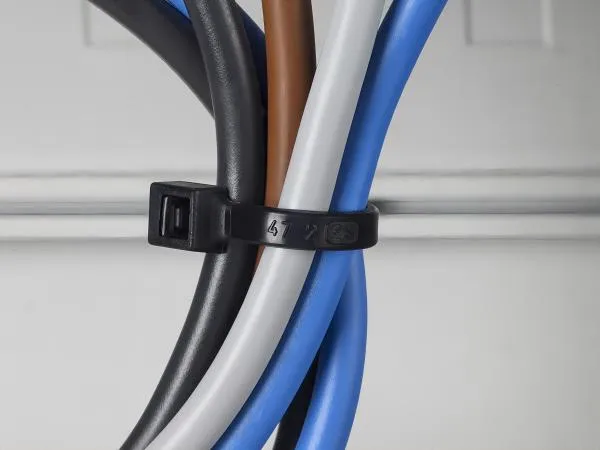
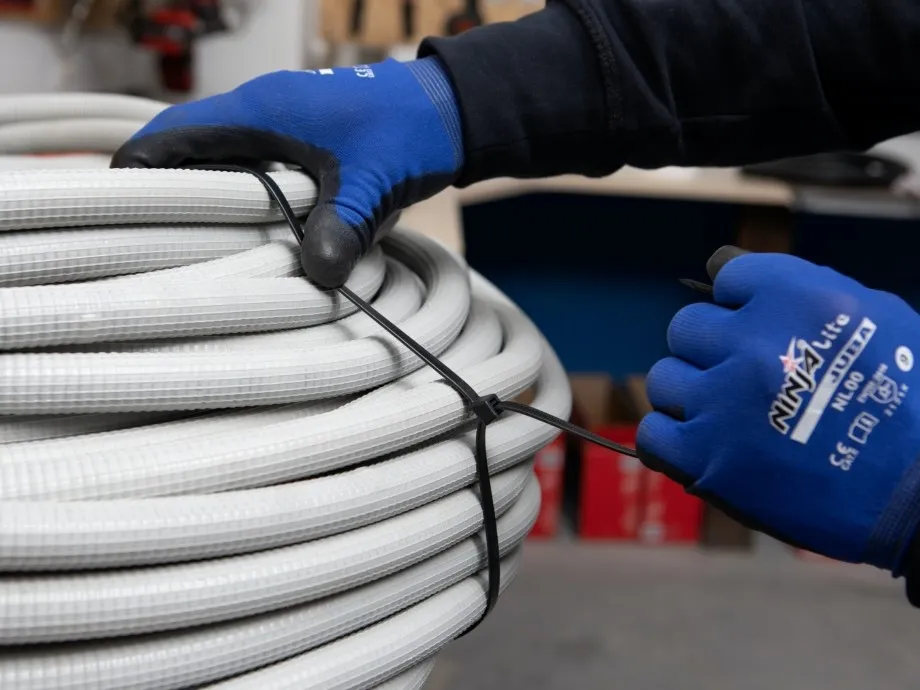
Wrapping and Inserting: When installing cable ties, first wrap the tie around the cable bundle, forming a loop, and then insert the tip into the slot. It is important to ensure that the cable tie is inserted smoothly and that there are no kinks or twists in the tie, as this can affect its holding power. Apply gentle and even force when tightening the cable tie to avoid damaging the cables or over - stressing the tie.
Using the Right Tools: For best results, it is recommended to use tensioning tools or cutting tools designed for cable ties. These tools can help control the tightening force and ensure that the cable tie is cut to the appropriate length with a smooth end. Using pliers or other makeshift tools to tighten cable ties can often lead to over - tightening or damage to the tie.

Avoiding Common Mistakes
Over - Tightening: One of the most common mistakes is over - tightening the cable tie. This can not only damage the cables being bundled but also reduce the lifespan of the cable tie itself. The optimal tightening force is typically half of the cable tie's claimed loop tensile strength. For example, for a 4.8 mm - wide cable tie with a claimed loop tensile strength of 222 N, the recommended tightening force is 111 N.
Using the Wrong Size: Another mistake is using a cable tie that is too small or too large for the cable bundle. A too - small tie may not be able to wrap around the bundle properly, while a too - large tie will be difficult to tighten and may not provide a secure hold. It is essential to measure the cable bundle diameter and choose the appropriate cable tie size accordingly.
Market Trends and Future Developments
Increasing Demand for Specialty Cable Ties
Meeting Specific Industry Needs: With the growth of various industries, there is an increasing demand for specialty cable ties. For example, in the automotive industry, there is a need for cable ties that are resistant to oil and chemicals, as well as those that can withstand high temperatures under the hood. In the medical industry, cable ties used in medical equipment need to meet strict hygiene and sterilization requirements. Manufacturers are therefore developing cable ties with specialized properties to meet these specific industry needs.
Advancements in Material Technology
Improving Performance and Durability: New materials and manufacturing processes are being developed to improve the performance and durability of cable ties. For instance, the use of advanced polymers and composite materials can enhance the tensile strength, heat resistance, and UV resistance of cable ties. Additionally, research is being conducted to develop self - tightening or adjustable cable ties, which would offer greater convenience and flexibility in cable management.
In conclusion, cable ties come in a variety of sizes and specifications to meet the diverse needs of different industries and applications. Understanding the characteristics and applications of different cable tie sizes, as well as following proper installation and usage techniques, is essential for effective cable management. As technology continues to advance, we can expect to see further improvements and innovations in the cable tie market, making cable management even more efficient and reliable.


