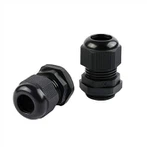
The hose is an important part of modern industry. The hose is mainly used as a wire, cable, wire, and cable protection tube of automation instrument signal and civil shower hose, with specifications from 3mm to 150mm. The following editor will tell you about the common types of metal hose joints?
1. Externally threaded joint: mainly used for the connection between the local junction box and the hose. Open a hole in the local box, insert the connector, and fix it with a lock nut.
2. Internal thread joint: mainly used for the screw connection of cable tube and hose.
3. Card sleeve-type joint: It is mainly used for the connection between metal hose and steel pipe. The installation of the card sleeve joint does not need to be threaded on the steel pipe.
4. Plug-in joint: mainly used for pre-embedded pipes with a small dense gap, inserted into the inner diameter of steel pipes, and easy to install.
5. Reducer joint: It is mainly used in the case that the diameter of the steel pipe and the metal hose is inconsistent, and it can be arbitrarily enlarged or reduced according to the requirements of on-site installation.
The meaning and difference between NPT, PT, G, metric threads of metal hoses
There are many types of threaded joints for metal hoses. Many people do not understand this very well. Now let's make some explanations and explanations for these threads:
NPT, PT, G are all pipe threads
NPT is the abbreviation of National (American) Pipe Thread, NPT is the American tapered pipe thread, which is used for sealing. A 60-degree tapered pipe thread that is an American standard for use in North America. National standards can be found in GB/T12716-1991
PT is the abbreviation of Pipe Thread, which is a 55-degree sealed conical pipe thread, which belongs to the Whitworth thread family and is mostly used in Europe and the Commonwealth of Nations. Commonly used in the water and gas pipe industry, the taper is specified as 1:16. National standards can be found in GB/T7306-2000
G is a 55-degree non-threaded sealing pipe thread, which belongs to the Whitworth thread family. Marked as G stands for the cylindrical thread. National standards can be found in GB/T7307-2001. G is the general name for pipe threads (Guan), and the division of 55 and 60 degrees is functional, commonly known as pipe circle. That is, the thread is machined from a cylindrical surface.
Metric threads are represented by pitch, and American and British threads are represented by the number of threads per inch, which is the biggest difference between them.
The metric thread is a 60-degree equilateral thread, the inch thread is an isosceles 55-degree thread, and the American thread is 60 degrees.
Metric threads are in metric units, and American and British threads are in imperial units.
Pipe threads are mainly used to connect pipes, and the inner and outer threads are closely matched, and there are two types of straight pipes and tapered pipes. Nominal diameter refers to the diameter of the connected pipe, obviously, the thread diameter is larger than the nominal diameter.
Five elements of metal hose selection
(1) Size: The nominal diameter of the hose, the type of joint (mainly flange connection, threaded connection, quick joint connection), the size of the metal hose, and the length of the hose.
(2) Pressure According to the actual working pressure of the hose, check the nominal diameter and pressure gauge of the corrugated metal hose to decide whether to use the stainless steel mesh type metal hose.
(3) Medium The chemical properties of the medium conveyed in the hose determine the material of each part of the hose according to the corrosion resistance of the hose material.
(4) Temperature The working temperature and range of the medium in the hose; the ambient temperature when the hose is working. When the temperature is high, the pressure after temperature correction must be determined according to the working pressure and temperature correction coefficient of the metal hose at high temperature, so as to determine the correct pressure level.
(5) Status According to the status of the hose, refer to the correct use and installation method of the metal hose and the optimum length of the hose during settlement compensation. Factors such as the length calculation of the various motion states of the hose and the minimum bending times and minimum bending radius of the hose, the parameters of the hose length are correctly selected and installed correctly.