


2. Performance Parameters Comparison
3. Application Scenarios of Industrial - grade Cable Ties and Regular Nylon Cable Ties
1.Material characteristics
Industrial tie wraps (also called stainless steel band fasteners or ratchet straps): Material selection varies by application requirements. Stainless steel is preferred for high-strength and corrosion-resistant applications, while specialized environments may utilize heat-stabilized nylon or UV-resistant polymers for extreme thermal (up to 300°F/149°C) or outdoor exposure conditions.
Standard nylon cable ties (also known as zip ties, wire ties, or hose clamps): Typically manufactured using UL-certified nylon-66 through injection molding processes. While offering baseline chemical resistance, corrosion protection, and electrical insulation properties (rated 600V), these plastic bundling straps demonstrate limited performance in sustained high-temperature environments (>185°F/85°C) and prolonged UV exposure scenarios without special additives.
2. Performance Parameters Comparison
| Features | Industrial Tie Wraps | Ordinary nylon cable ties |
| Tensile strength | Higher (such as "impact resistance, wear resistance" mentioned in search result ) | Relatively low, suitable for light load scenarios |
| Temperature range | -40℃~+150℃ (some high temperature resistant models) | -40℃~+85℃6 |
| Corrosion resistance | Strong (suitable for corrosive environments such as chemicals and ships) | General (long-term exposure may weather) |
| Environmental protection | Comply with industrial environmental standards (such as halogen-free, recyclable) | Ordinary PA66 material, low environmental protection |
3. Application Scenarios of Industrial - grade Cable Ties and Regular Nylon Cable Ties
A. Harsh Environments
Power Equipment In power plants, substations and other locations, power equipment generates a large amount of heat during operation, and the surrounding environment is subject to high - voltage and strong electromagnetic interference. Industrial - grade cable ties, also known as industrial - grade wire ties or industrial - grade zip ties, need to have excellent high - temperature resistance. This prevents them from softening and deforming in high - temperature environments, which could affect the fixation of cables and other equipment. At the same time, they must possess outstanding electrical insulation properties to avoid safety accidents caused by the conductivity of the cable ties. For instance, in the internal wiring of large - scale transformers, the industrial - grade nylon cable ties used should be able to withstand temperatures above 150°C, and their insulation resistance must meet extremely high standards to ensure the stable operation of the power system.
Shipbuilding Ships are constantly exposed to a marine environment with high humidity and high salt - fog. Industrial - grade cable ties, or industrial - grade fasteners, must have excellent corrosion resistance. Whether used to bind cables and pipes inside the ship or to fix external equipment, they should be able to resist the erosion of seawater and prevent rusting and breakage. Additionally, considering the vibrations during the ship's voyage, industrial - grade cable ties need to have sufficient flexibility and vibration resistance to ensure the long - term and stable fixation of various items. For example, in the engine room of a ship, stainless - steel industrial - grade cable ties are used to secure fuel pipelines and cooling water pipelines, effectively withstanding the impact of the harsh environment.
Rail Transit Trains generate strong vibrations and impacts during operation. Industrial - grade cable ties, sometimes referred to as industrial - grade lashing straps, should have excellent vibration resistance to ensure that they do not loosen or fall off under long - term vibration. Industrial - grade cable ties used in rail transit also need to meet strict safety standards such as fire - resistance, low - smoke, and halogen - free requirements to guarantee passenger safety in case of emergencies. For example, in the electrical equipment compartments of trains, the industrial - grade cable ties used must pass relevant fire - retardant tests, and their smoke density and toxic gas release amounts must comply with the standards of the rail transit industry.
High - temperature Workshops In high - temperature workshops such as steel plants and glass factories, the ambient temperature often reaches several hundred degrees Celsius. Industrial - grade cable ties, or industrial - grade cable binders, need to be able to withstand such high temperatures and maintain their physical and mechanical properties. For example, near the blast furnace in a steel plant, the industrial - grade cable ties used to bind cables and equipment should be able to withstand instant high temperatures of 500°C or even higher without burning or melting, ensuring the normal operation of production equipment.
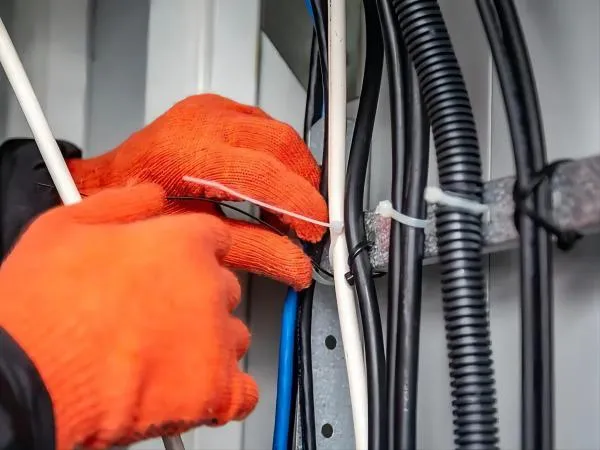
Be used in a wide range of industries.


B. Special Requirements
Anti - static Requirement In places sensitive to static electricity, such as electronic semiconductor manufacturing workshops and chemical production workshops, static electricity can damage electronic products and trigger explosions of chemical products. Industrial - grade anti - static cable ties, made of anti - static materials, can effectively conduct away static electricity and avoid the hazards caused by static electricity accumulation. For example, in a chip manufacturing workshop, the industrial - grade cable ties used to bind the cables of electronic component production lines need to have their surface resistance controlled within a specific range to meet the anti - static requirements.
Oil - resistant Requirement In industries such as automobile manufacturing and mechanical processing, a large amount of oil is generated during equipment operation. Industrial - grade oil - resistant cable ties need to have good oil resistance and should not expand, deform, or lose strength after long - term exposure to oil. For example, in an automobile engine assembly workshop, the industrial - grade cable ties used to fix the internal wiring harnesses and oil pipes of the engine should be able to work stably in an oil environment such as engine oil for a long time.
UV - resistant Requirement In outdoor power facilities, solar power plants and other scenarios, equipment is exposed to strong ultraviolet (UV) radiation for a long time. Industrial - grade UV - resistant cable ties, like Teflon cable ties, have excellent UV - resistance. They can avoid aging, embrittlement, etc. under long - term UV irradiation, ensuring the long - term and effective fixation of equipment. For example, in the installation of solar photovoltaic panels, Teflon cable ties are used to bind the connection wires and brackets of the photovoltaic panels, and they can maintain their performance for many years under harsh outdoor lighting conditions.
C. Safety Requirements
Binding High - voltage Cables High - voltage cables transmit extremely high voltages. Once the cable ties fail, causing cable displacement, short - circuits, etc., serious power accidents will occur. Therefore, industrial - grade cable ties for binding high - voltage cables, also known as high - voltage cable fasteners, not only need to have high strength to bear the weight and tension of the cables themselves but also need to have good electrical insulation and flame - retardant properties. For example, in high - voltage transmission lines of 110 kV and above, the industrial - grade cable ties used must pass strict electrical performance tests and flame - retardant tests to ensure safety and reliability in high - voltage environments.
Flammable Environments In flammable environments such as oil refineries, oil depots, and coal mines, the fire - resistance level requirements for cable ties are extremely high. Industrial - grade flame - retardant cable ties need to be made of flame - retardant materials and meet corresponding fire - resistance standards, such as the UL94 V - 0 level. These cable ties can self - extinguish quickly when encountering an open flame and will not continue to burn, thus reducing the risk of fire. For example, in underground coal mines, the industrial - grade cable ties used to fix ventilation ducts and electrical equipment must have excellent fire - resistance properties to ensure safe production in the mine.
A. Daily Use
Home Wire Management There are numerous electrical appliances at home, and messy wires not only affect the appearance but also pose safety hazards. Regular nylon cable ties, or regular nylon wire ties, can easily bind various wires such as those of TVs, computers, chargers, etc. together, making them neat and orderly. Colored regular nylon cable ties can also be used for classification and identification according to different appliances or areas, facilitating management and search. For example, black regular nylon cable ties can be used to bind the wires around the living - room TV, while pink regular nylon cable ties can be used to bind the charging wires by the bedside in the bedroom, which is both beautiful and practical.
Horticultural Fixation In horticultural planting, regular nylon cable ties are often used to fix plant vines, branches, etc. For climbing plants like grapevines and morning glories, regular nylon cable ties are used to fix their vines to supports, fences, etc., helping the plants climb and grow better. Their flexibility can avoid harming the plants, and their low cost makes them suitable for large - scale use. In flower planting, regular nylon cable ties can also be used to bind multiple flowers together to make the shape more beautiful.
Light - duty Packaging In the packaging of some light - duty products, regular nylon cable ties can replace traditional ropes or tapes. For example, for small gift boxes, stationery packaging, etc., colored regular nylon cable ties are used for binding. This not only plays a fixing role but also enhances the aesthetics of the packaging. Moreover, regular nylon cable ties are easy to use, and only a gentle pull is needed for fixation without additional tools.
B. Temporary Fixation
Internal Wiring Harnesses of Electronic Devices During the production of electronic devices, regular nylon cable ties are often used to temporarily fix the internal wiring harnesses. When assembling electronic devices, various wires and flat cables need to be organized and fixed for subsequent welding, installation, and other processes. Regular nylon cable ties can quickly bind the wiring harnesses together, and the operation is simple and fast. In addition, during the debugging or maintenance of the device, if it is necessary to adjust the position of the wiring harness, regular nylon cable ties are relatively easy to untie. For example, inside a computer host, during the installation and wiring of the motherboard, regular nylon cable ties are used to temporarily fix the power cords, data cables, etc.
Temporary Binding In some temporary occasions, such as exhibition layout and event - site construction, some items need to be temporarily bound and fixed. Regular nylon cable ties, with their low cost and easy - to - use features, are an ideal choice. For example, at an exhibition site, regular nylon cable ties are used to temporarily fix the promotional materials and decorations on the display racks; during the construction of an event - site stage, regular nylon cable ties are used to fix some temporary cables and equipment. Since these occasions do not have high requirements for the long - term weather resistance of the binding, regular nylon cable ties can fully meet the needs.


